Unexpected noise issues in a prototype delay market launch and undermine the perception of quality. ASCEE identifies the physical cause of annoying noise. Using lab measurements and COMSOL simulations, we analyze transmission paths and design solutions that fit within your product’s existing installation space.
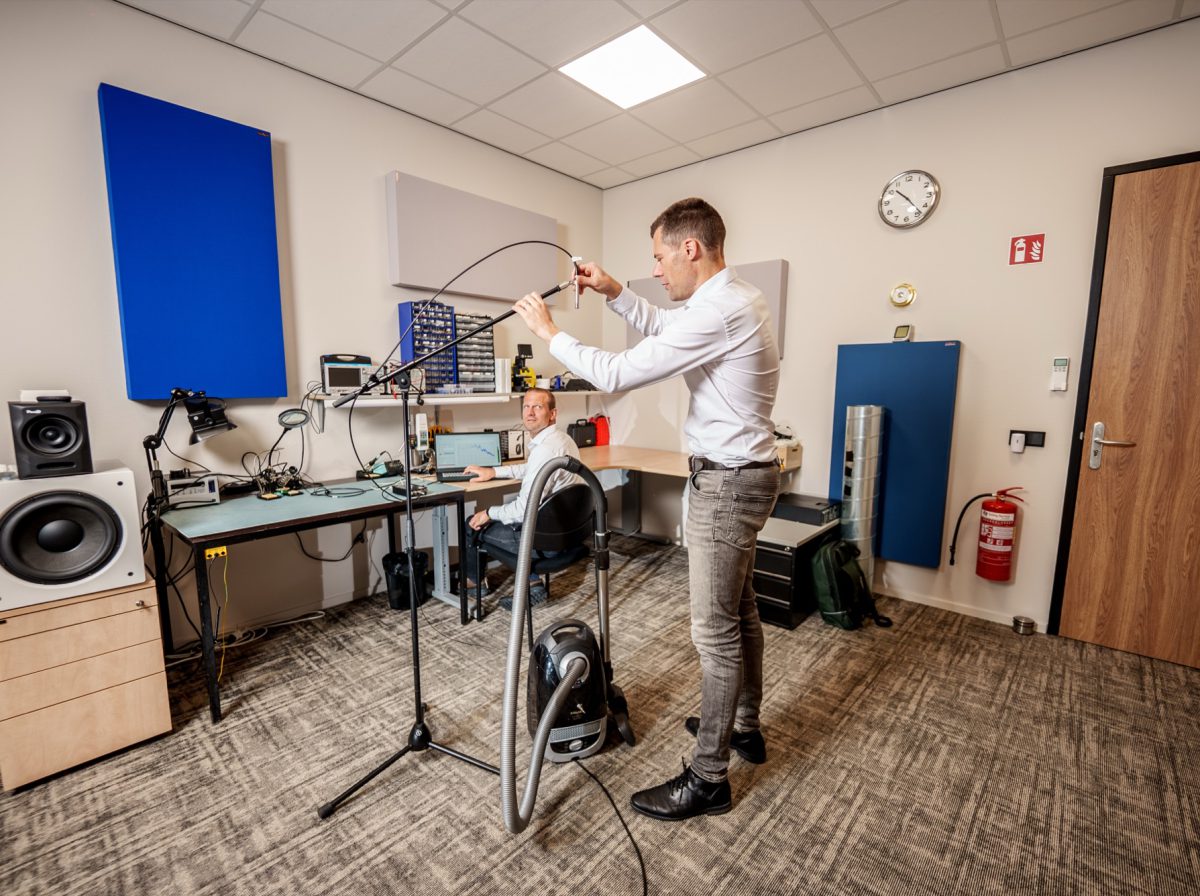
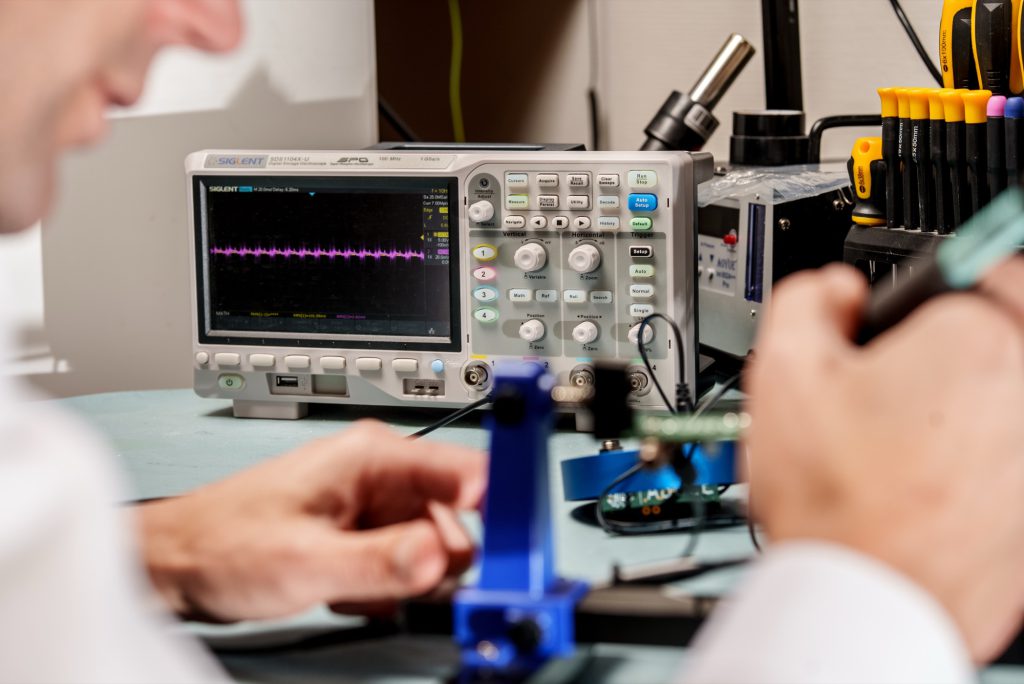
Noise pollution is rarely caused by a single component, but rather by the interaction between the source, the structure (the path), and the radiating surface. In our laboratory, we analyze the noise problem using frequency and transmission measurements. We separate airborne noise from structure-borne noise using Class 1 microphones and vibration measurements. This allows us to identify which specific frequencies or resonances are the culprits. Instead of randomly adding damping, we provide insight into how vibration energy travels through the enclosure.
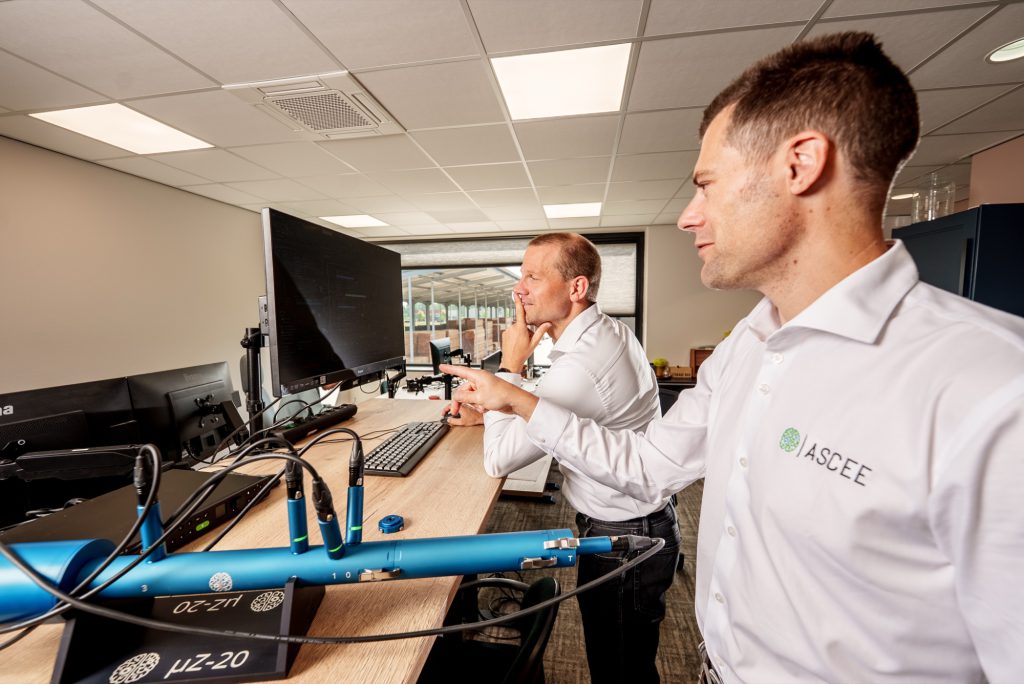
Once an enclosure is finalized, there is often no room for standard sound insulation. ASCEE designs custom solutions that provide maximum sound attenuation within the existing space constraints. Using COMSOL Multiphysics, we simulate wave propagation and acoustic interaction based on your CAD model. We virtually test whether sound barriers, quarter-wavelength cavities, or specific porous materials eliminate the disruptive frequencies. This allows us to solve the noise problem with minimal adjustments, without having to change the product dimensions.
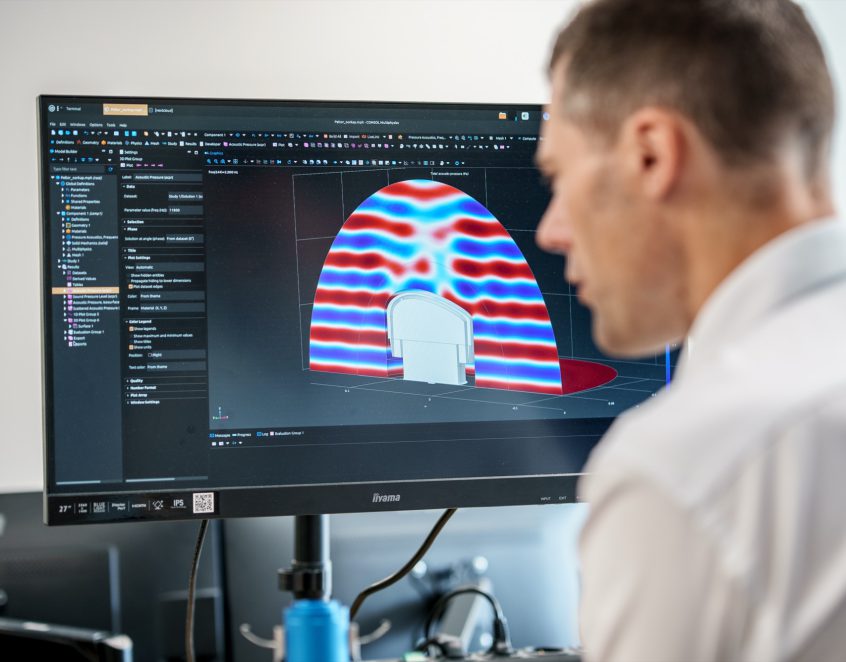
As a COMSOL Certified Consultant, we build multiphysics simulation models to calculate acoustic waves, fluid-structure interaction, and transmission loss through panels.
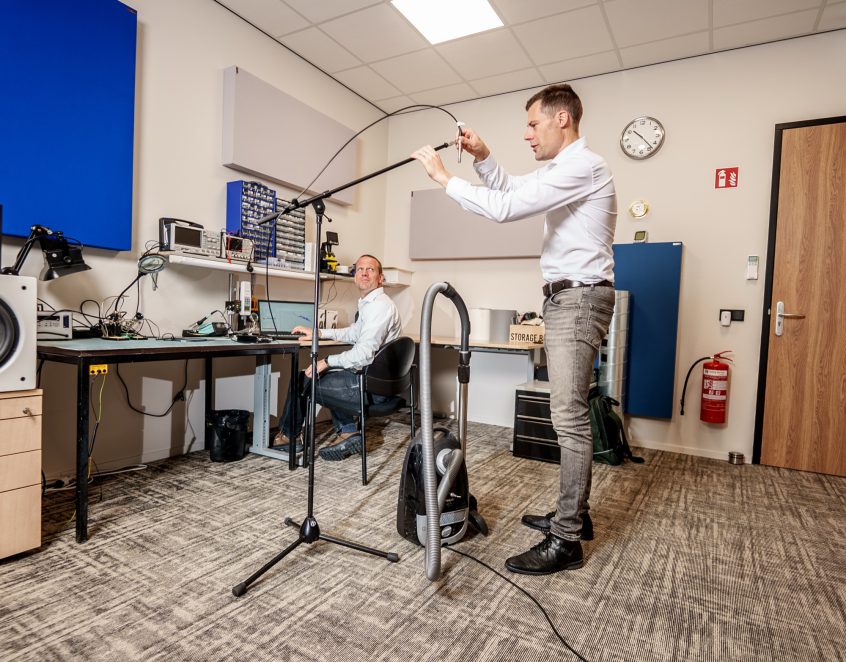
Our laboratory features a 60 m² anechoic test chamber, μZ impedance tubes for material characterization, and ear simulators for electroacoustic measurements.
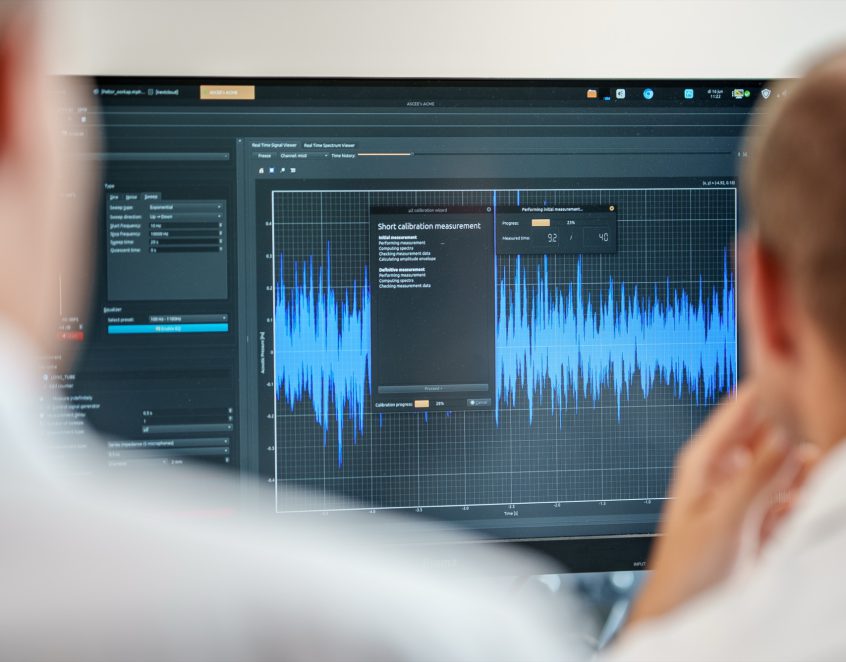
Using our ACME measurement platform, we control data acquisition systems to perform measurements, generate test signals, and determine transfer functions, FFT analyses, and sound levels.

