Unwanted vibrations in a product cause mechanical stress and annoying structural noise. As an R&D engineer, you want to prevent resonances before the production phase. ASCEE investigates vibration behavior using FEM simulations in COMSOL and targeted measurements with accelerometers. This allows you to optimize the design and damping based on factual data.
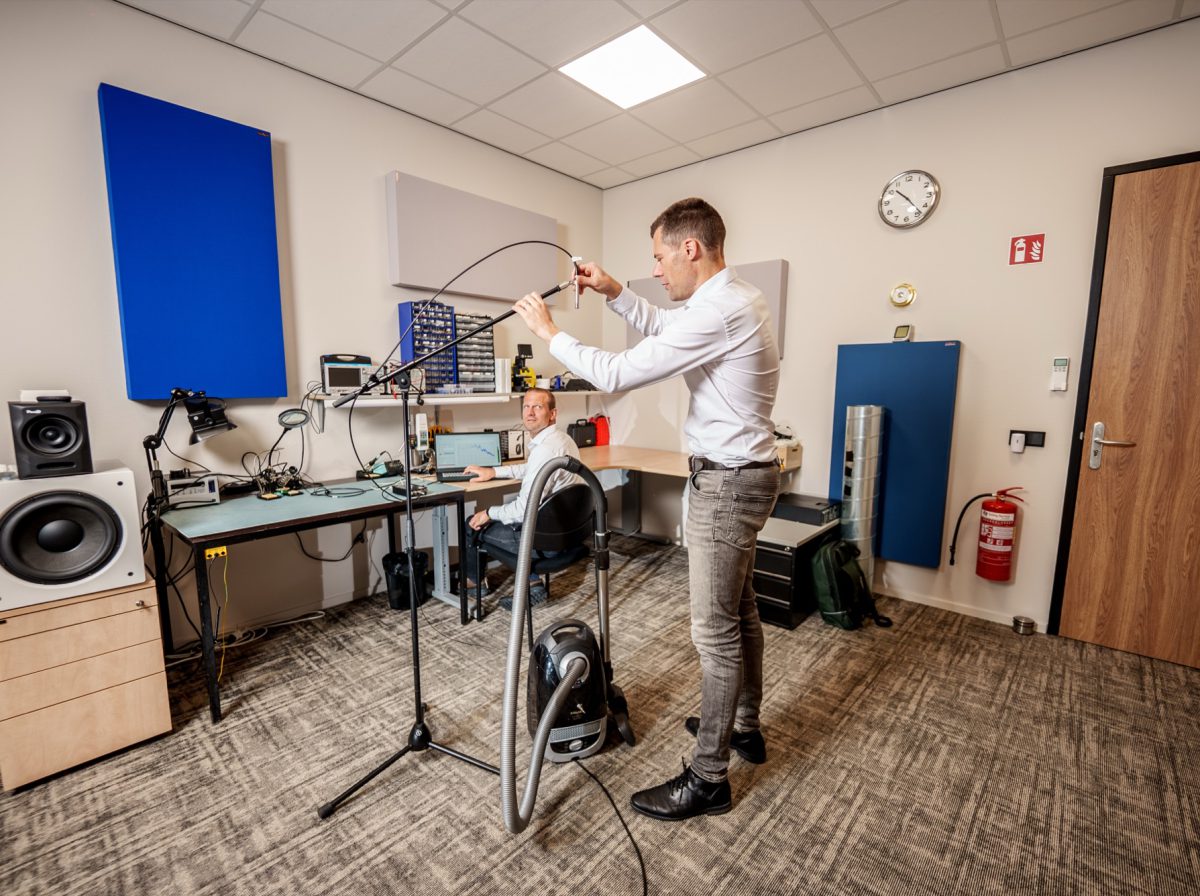
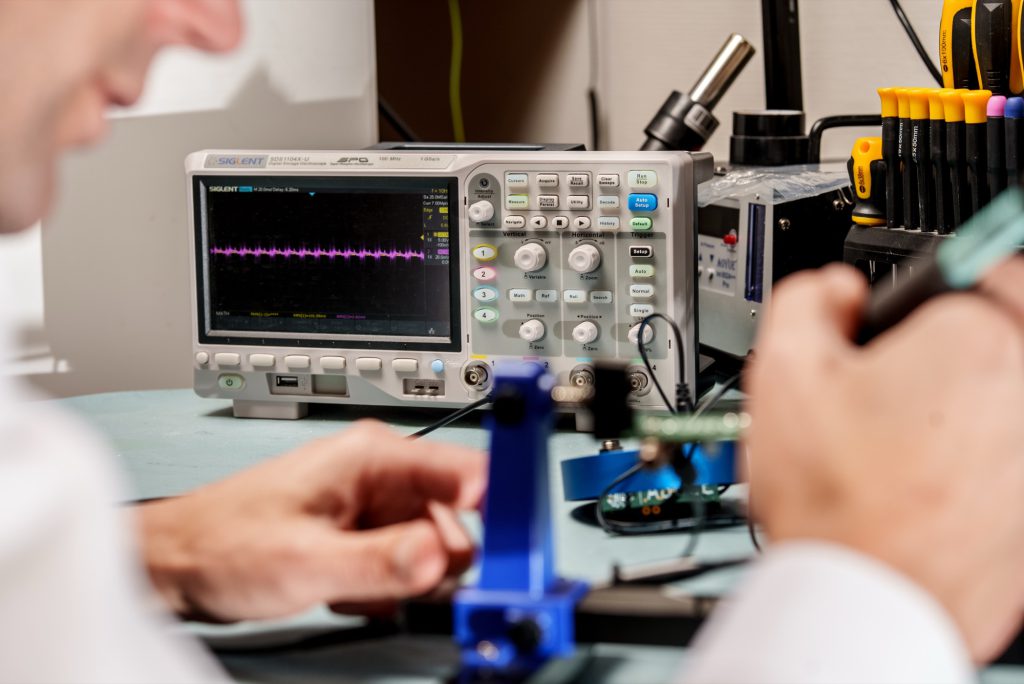
Unwanted vibrations occur when operational forces from motors, fans, or actuators coincide with the natural frequencies of the structure. Without a computational model, vibration control is pure guesswork. In COMSOL Multiphysics, we perform modal and harmonic analyses on your CAD design. We calculate the natural modes, dynamic stresses, and transmission paths. This allows us to determine in advance whether structural stiffening or targeted damping will resolve the vibration behavior.
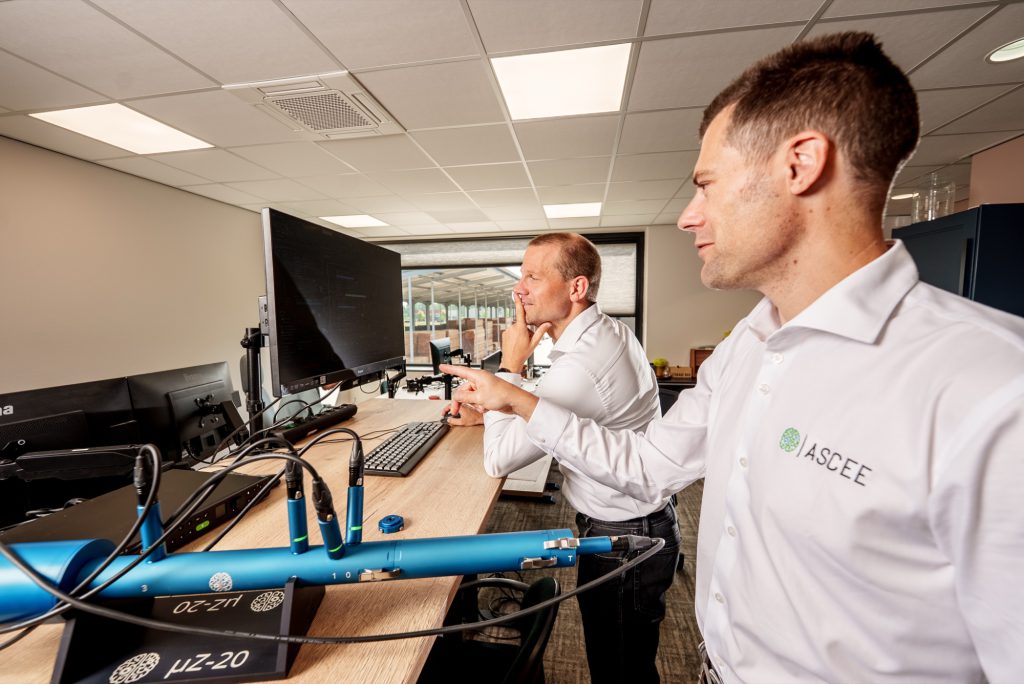
Vibrating panels and enclosures act as loudspeakers that convert mechanical energy into annoying noise. As an acoustic engineering firm, we approach vibrations from the perspective of this physical interaction. In our laboratory, we verify numerical simulations using point measurements from accelerometers on critical components. At the same time, we measure the radiated sound power using Class 1 microphones in our 60 m² anechoic chamber. This allows us to verify whether design modifications effectively reduce noise.
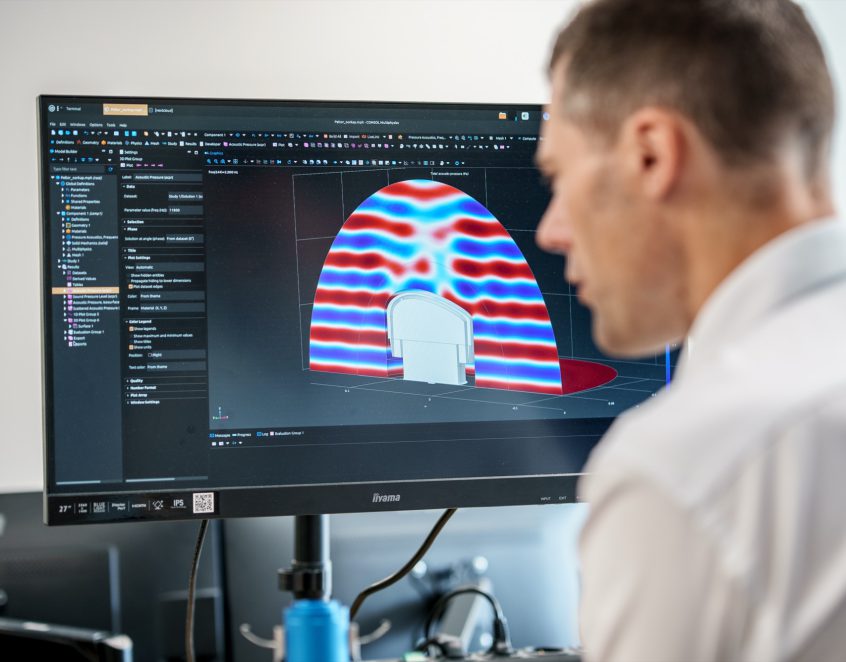
As COMSOL Certified Consultants, we model structural mechanics and acoustics. We predict natural frequencies, stresses, and structural noise directly from your 3D CAD design.
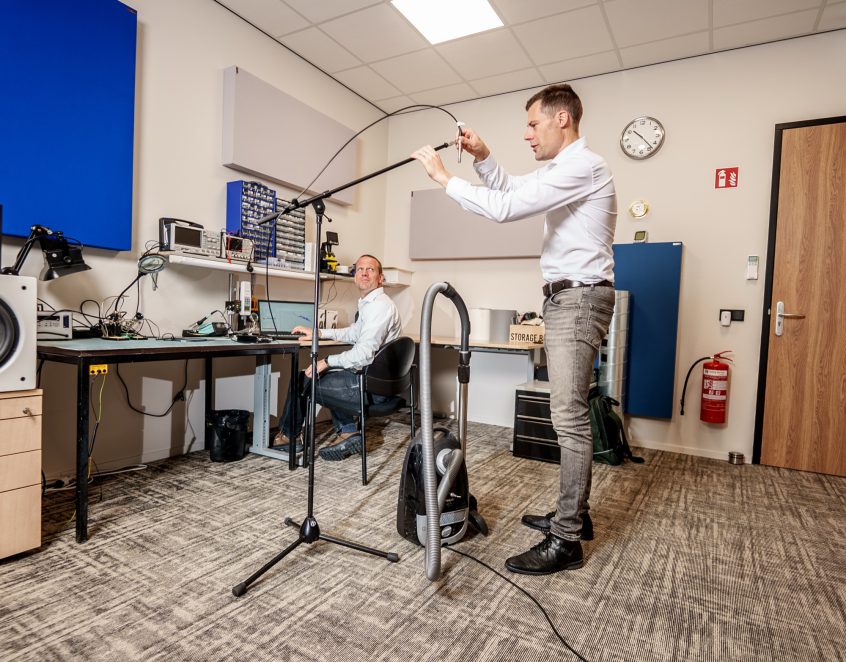
In our acoustic laboratory, we measure vibration accelerations at specific points using accelerometers and determine the resulting sound power using microphones.
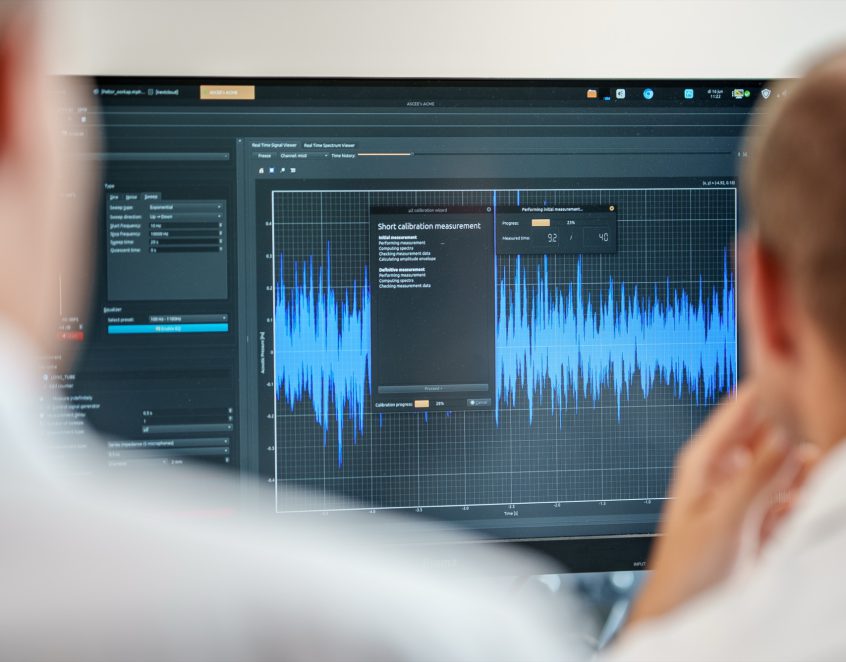
Our ACME platform controls the DT9837A for data acquisition and calculates real-time FFT spectra and transfer functions between acceleration and microphone signals.

