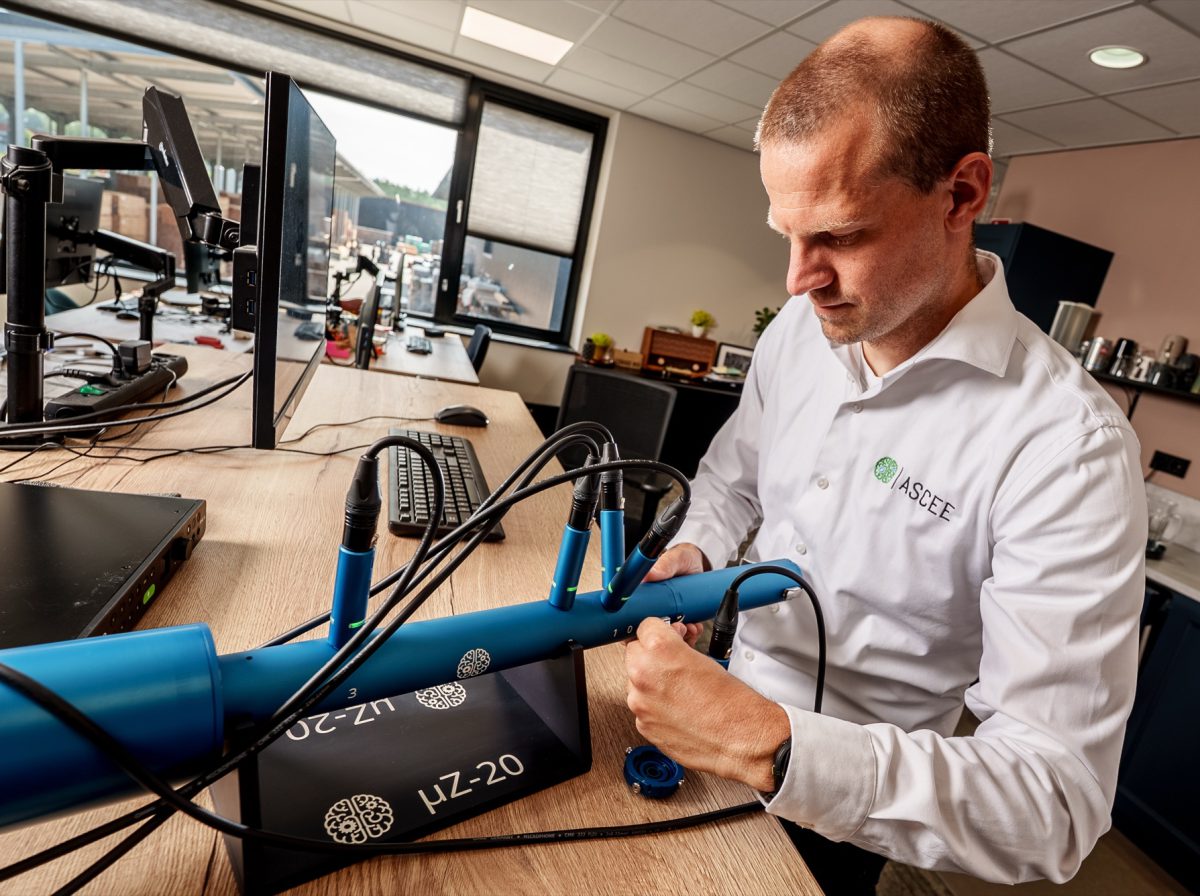
In consumer electronics, acoustic performance directly determines how a user experiences the product. In compact consumer products, such as hearables, wearables, and smart home devices, micro-acoustic components compete directly with mechanical installation space and thermal constraints. ASCEE combines numerical COMSOL simulations with laboratory measurements to optimize microacoustics, sound quality, and spatial interaction early in the R&D process.

Model the electroacoustic coupling of drivers in compact enclosures to optimize frequency response and SPL.

Quantify thermal and viscous losses in acoustic meshes and vents to strike a balance between protection and sound.
Analyze THD and parasitic enclosure resonances to reduce distortion and ensure signal transmission.
Quantify sound levels and acoustic insulation to meet standards without losing dynamic range.
Calculate directional characteristics and port interaction to control diffraction at the edges of the enclosure.
Measure the load on in-ear drivers using an IEC 60318-4 ear simulator and digital twins to ensure stable bass reproduction.
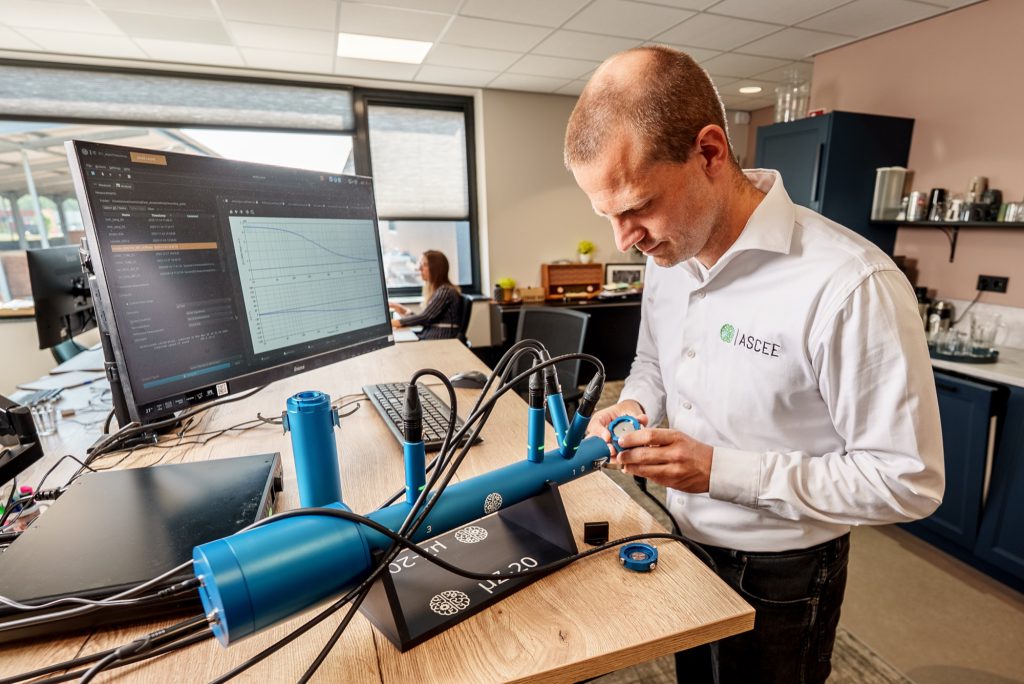
In consumer electronics, size constraints push drivers and acoustic channels down to the millimeter and micrometer scales. At this scale, thermal and viscous boundary layer effects significantly influence system behavior. We combine numerical COMSOL simulations with impedance tube measurements to quantify the series impedances of meshes, pore resonances, and membrane dynamics. This allows you to predict frequency response and prevent acoustic short-circuiting or unwanted damping well before the prototype phase.
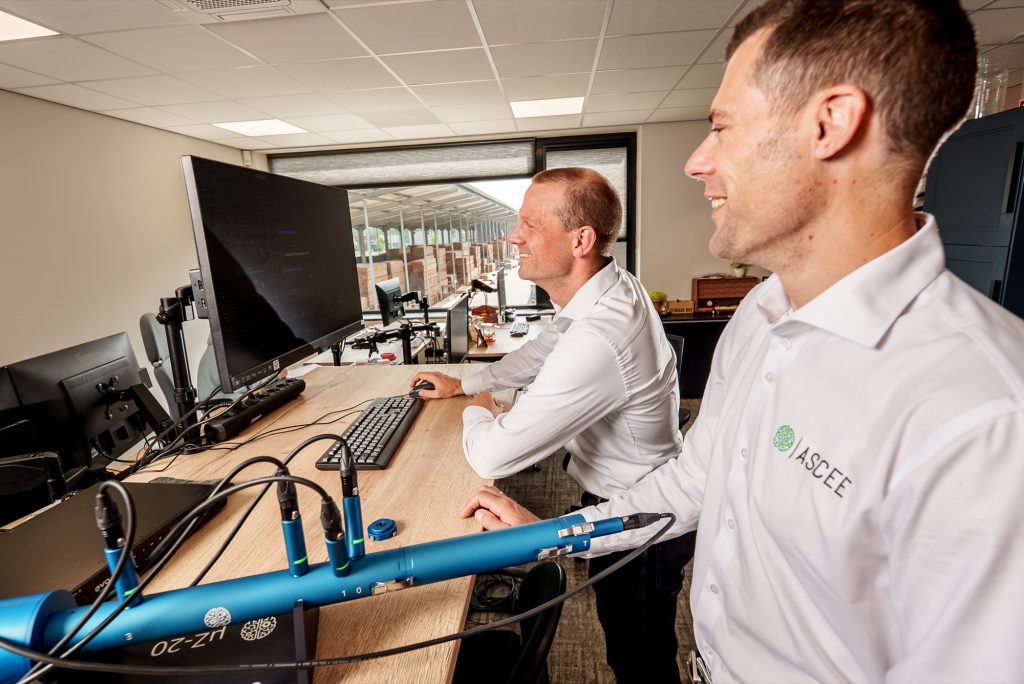
In compact consumer electronics, small components with high sound pressure levels (SPL) often compromise sound quality. High acoustic output leads to nonlinear distortions. ASCEE quantitatively assesses this trade-off. In our laboratory, we measure distortion and phase behavior, after which we optimize the system using COMSOL simulations. This allows us to achieve the required sound pressure level without compromising sound balance or speech intelligibility.
