Acoustic theory only gains value when computational models correspond exactly with measurements in practice. Our publications and technical articles cover the methodology behind this work: from numerical simulations in COMSOL Multiphysics® to material characterization using the µZ impedance bus system. We explain which physical mechanisms are involved, how to reliably build computational models, and how to use measurement data to optimize product design.
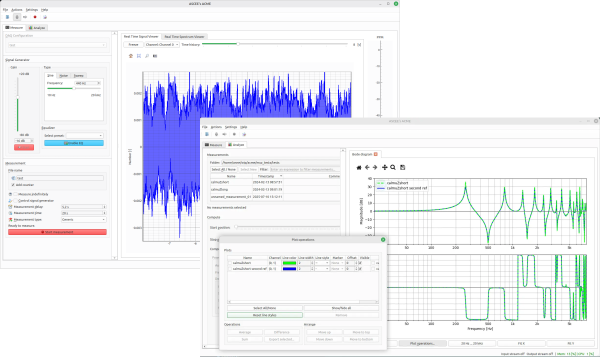
ACME version 0.8 speeds up measurements for the µZ system by up to three times by saving the Cross Power Spectrum in real time during the test.
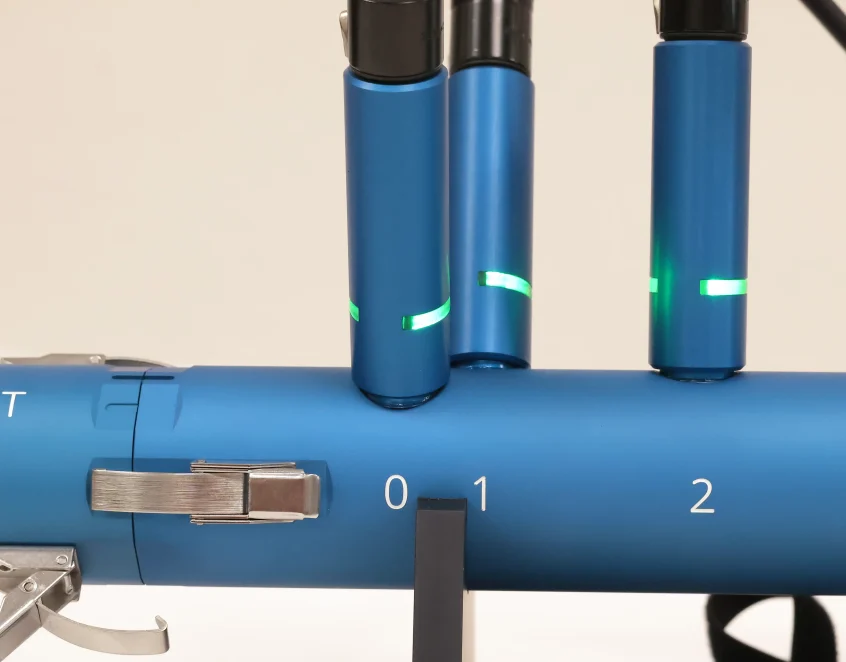
ASCEE is expanding its product portfolio with the new µZ-20 impedance tube for measuring meshes and vents from 20 Hz to 8 kHz in a single run.
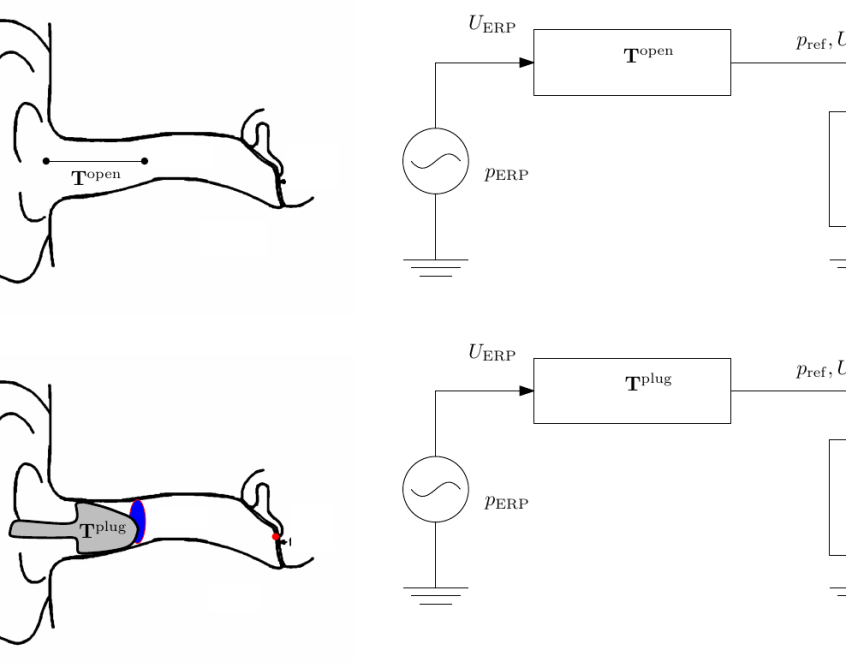
During the NAG master class, Anne de Jong gave a lecture on the effect of earplugs and hearing protection on sound transmission to the eardrum.

At the 2024 Precision Fair in Den Bosch, ASCEE demonstrated the µZ impedance tube and COMSOL simulations for precision technology.
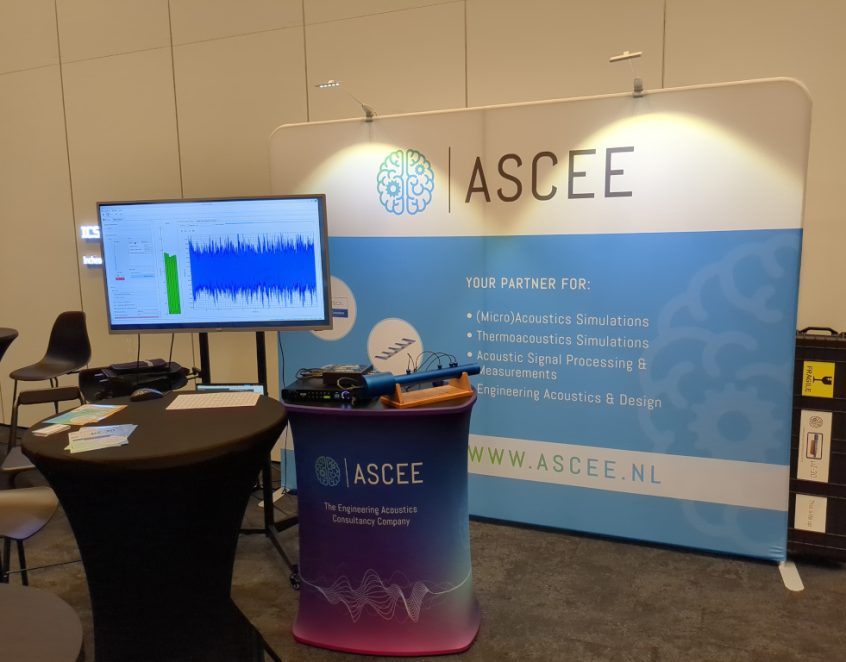
At the ICSV conference in Amsterdam, ASCEE presented the new µZ-30 impedance system, and Anne de Jong led a session on electroacoustics.
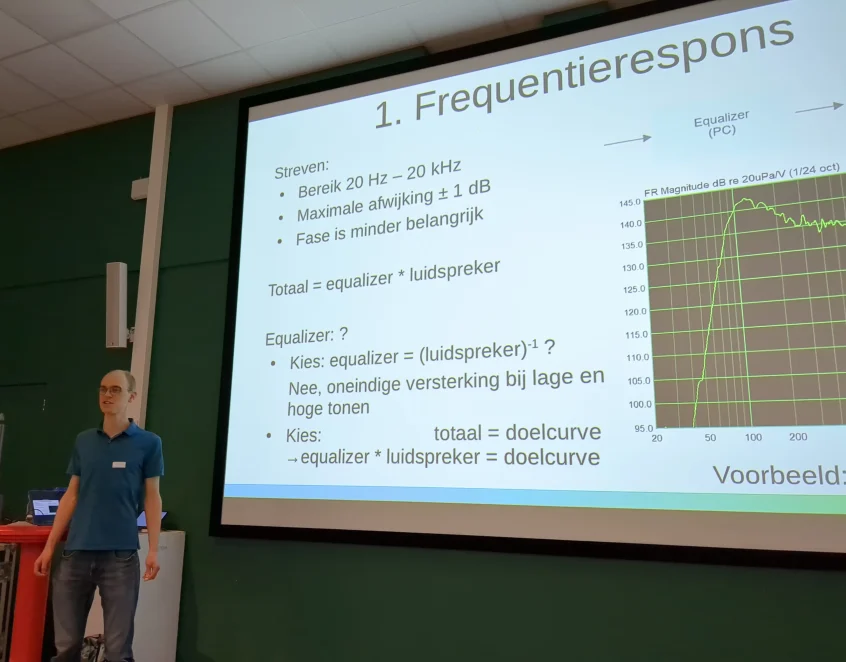
Casper Jansen's presentation and abstract on omnidirectional point sources from the NAG Electroacoustics Theme Day are now online.
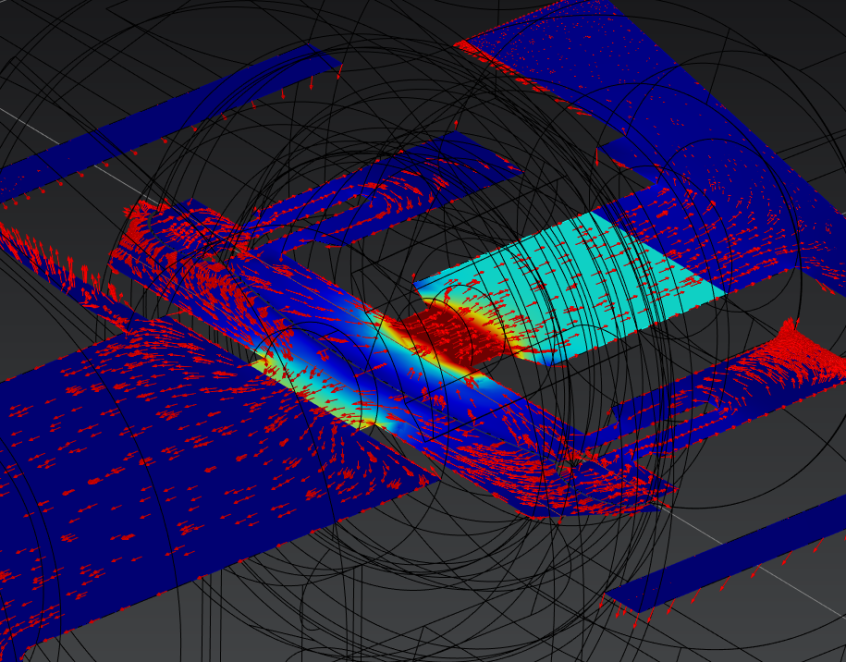
ASCEE was present at the COMSOL Conference 2023 in Munich with a booth and a presentation on faster thermoviscous microacoustics.
ASCEE was present at the COMSOL Conference 2023 in Munich with a booth and a presentation on faster thermoviscous microacoustics.
Publication on microacoustics: How the SLNS model in COMSOL speeds up thermoviscous simulations by up to 9.2 times while maintaining accuracy.
Casper Jansen is investigating a DIY speaker as an omnidirectional point source with a constant radiation pattern achieved through an FIR equalizer.
Research on the parametric acoustic array: how nonlinear ultrasonic interaction in air generates highly directional audible sound.
Publication on the modeling of nonlinear acoustics: from wave steepening and shock waves to acoustic streaming and levitation.
Publication on duct silencers: How to design fiber-free silencers without pressure loss using a 1D transfer matrix and 3D modeling in COMSOL.
This publication demonstrates how woven stainless steel mesh, used as an acoustic liner in fiber-free silencers, provides 28 dB of sound attenuation without the use of absorbent wool.
This seminar provides an overview of technical acoustics for product development, ranging from basic physical concepts to simulations using FEM and BEM.
This measurement report examines the noise levels and directivity of race trucks at Circuit Zandvoort to ensure compliance with the 95 dBA standard.
This publication presents a 1D model for efficiently calculating nonlinear deformation and thermoviscous damping in narrow ear canals.
This publication demonstrates how the Local Plane Wave method, using a spherical microphone array, measures in-situ sound absorption in random fields.
This publication demonstrates how the LPW method, using a MEMS array, determines in-situ sound absorption and power without prior knowledge of the source.
This dissertation presents fast computational models for thermoacoustic systems and calculates the steady state in the frequency domain.
This publication presents a fast frequency-domain method for directly calculating the steady state of thermoacoustic systems.
This JASA article presents a fast 1D model that solves for the steady state of thermoacoustic systems without time-consuming time integration.
This JASA article presents a 1D model for oscillatory heat transfer in parallel-plate thermoacoustic heat exchangers.
This publication presents a 2D finite-element model for calculating the stability limit of a standing-wave thermoacoustic engine.
This conference paper demonstrates how the stability limit of a thermoacoustic engine is determined exactly using a 2D finite-element method.

