In the HVAC industry, ventilation ducts serve as a direct transmission path for sound. ASCEE supports R&D teams with simulations and laboratory measurements to optimize duct acoustics and silencers. Using LRFTubes, we calculate 1D wave propagation in ducts. In our lab, we validate silencers under flow conditions in accordance with ISO 7235 and measure radiated acoustic power.
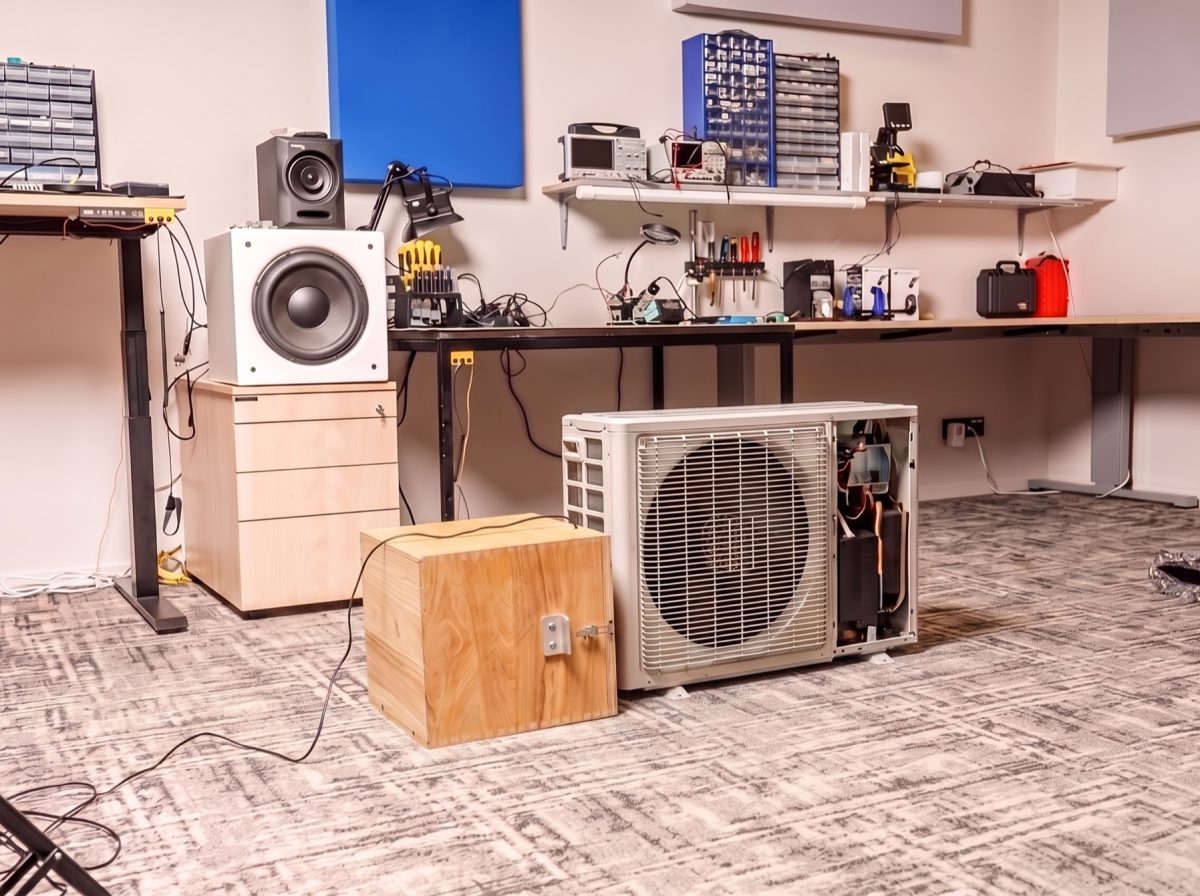

Measure the acoustic attenuation of ventilation dampers under airflow conditions in accordance with ISO 7235:2003 in our lab.

Calculate 1D wave propagation in channels and cavities below the cut-on frequency for fast optimization runs.
Tune quarter-wave and Helmholtz resonators precisely to the fixed tonal frequencies of fans.
Determine DBM and JCA parameters in the µZ impedance tube for accurate input into simulation models.
Measure the sound power of equipment in our 60 m² anechoic chamber using Class 1 microphones.
Simulate 3D wave phenomena and acoustic-mechanical interactions where 1D approaches are no longer sufficient.
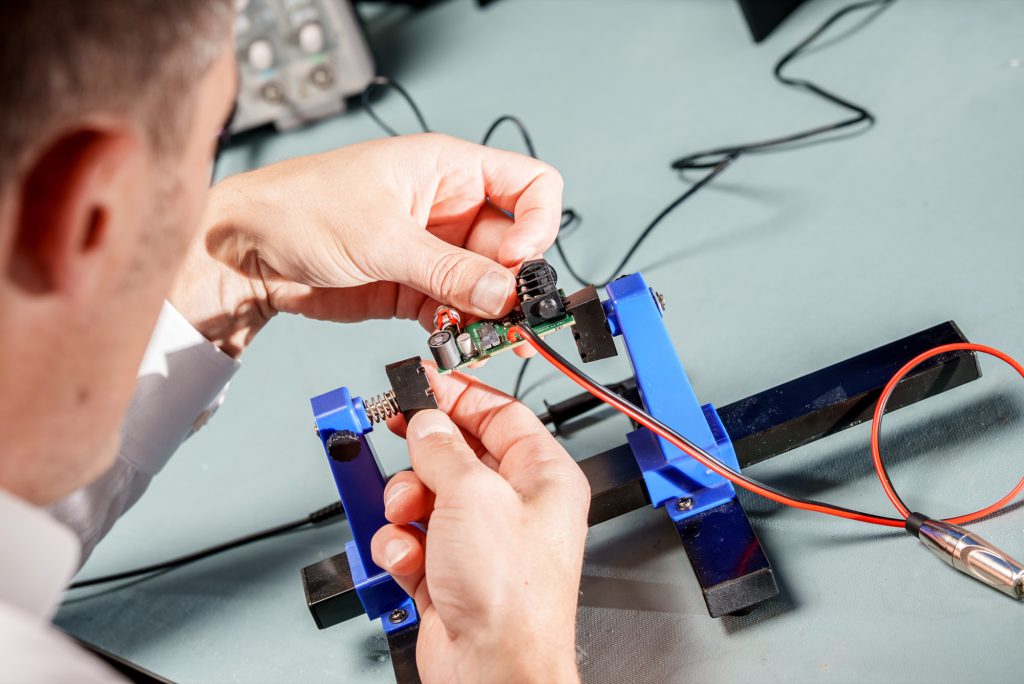
In ventilation ducts, sound propagates through the air column with virtually no loss. Standard silencers sometimes cause unwanted pressure drops and are ineffective at reducing low-frequency noise. Using our LRFTubes simulation program, we model 1D wave propagation, expansion chambers, and quarter-wavelength resonators below the cut-on frequency of higher-order modes. In our laboratory, we measure the transmission loss of silencers in accordance with ISO 7235:2003, including flow conditions. This allows us to optimize silencers for maximum noise reduction with minimal pressure loss, within a given space budget.
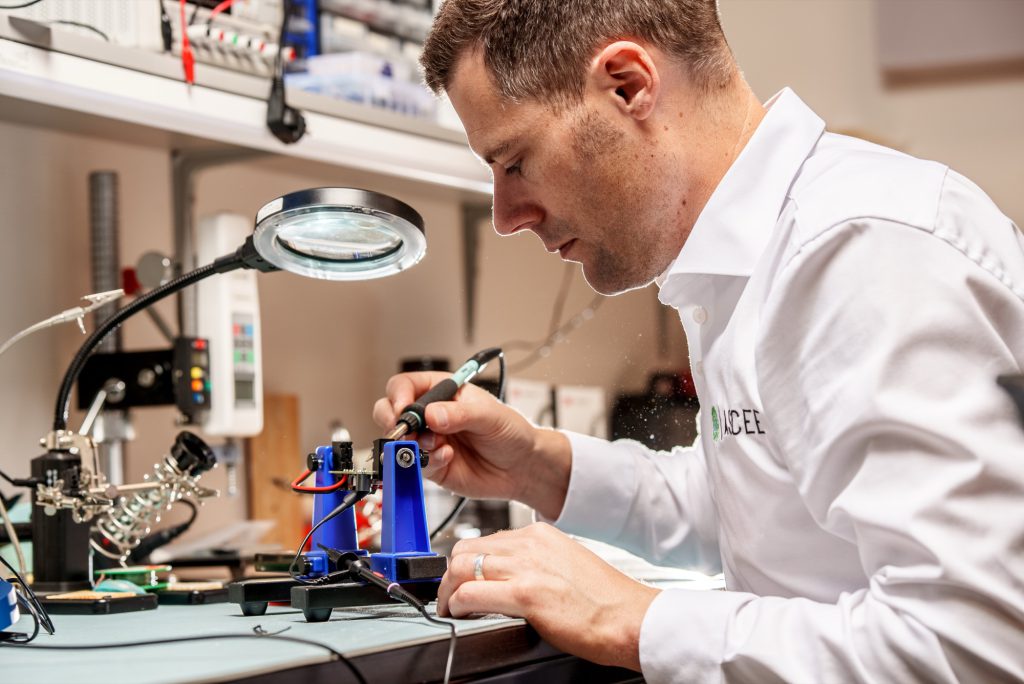
Noise reduction in HVAC equipment requires an understanding of both the source and the enclosure. In our laboratory, we characterize porous absorption materials and perforated plates using our in-house µZ impedance tube. We import the measured Delaney-Bazley-Miki (DBM) and Johnson-Champoux-Allard (JCA) parameters into LRFTubes or COMSOL for enclosure simulations. We then validate the total acoustic power of the system using Class 1 measurement microphones in our 60 m² test chamber.
