In-situ separation of incident and reflected sound
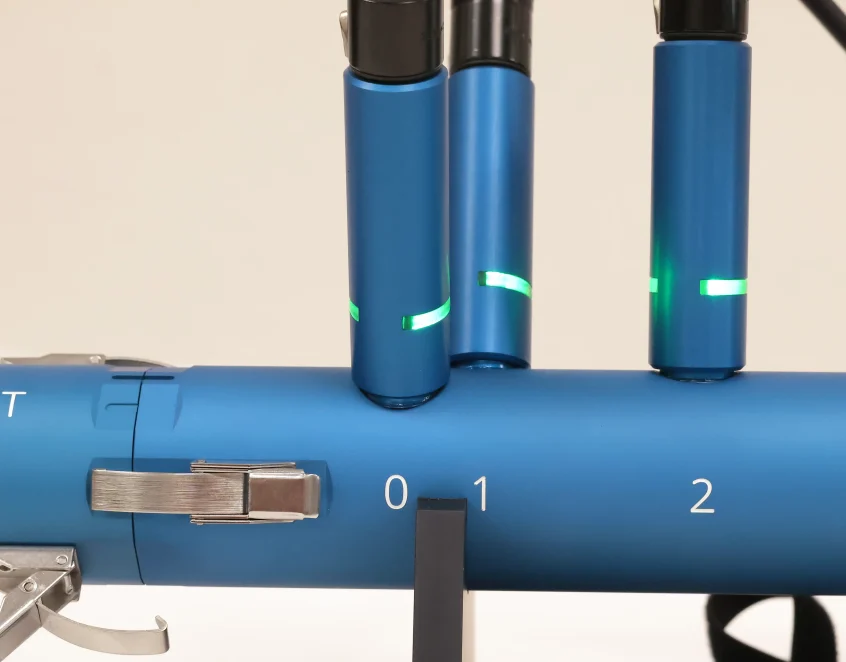
Researchers from the University of Twente and Soundinsight present a method for determining the in-situ absorption coefficient in arbitrary sound fields. The Local Plane Wave (LPW) method decomposes the local pressure and particle velocity into an incident and a reflected plane wave, allowing the incident power to be calculated directly without knowledge of the sound source. Extensions (LSPW and LAPW) correct for oblique incidence using an 8-channel MEMS array. Validation measurements on a car seat reveal local absorption differences at stitching seams. This forms the basis for the SonoCat spherical microphone (up to 10 kHz).
Citation for the publication
-
Authors: Ysbrand Wijnant (University of Twente / Soundinsight), Jen-Hsuan Ho (Soundinsight), Niels Consten (Soundinsight), and Anne de Jong (Soundinsight / ASCEE)
-
Publication: Proceedings of the 42nd Annual Conference on Acoustics (DAGA 2016)
-
Location & Date: Aachen, Germany (March 14–17, 2016)
-
Keywords: In-situ absorption, Local Plane Wave (LPW) method, intensity measurement, MEMS array, SonoCat
-
View the publication on the University of Twente Research Portal